MORE ABOUT HKUST
University News
Academic Departments A-Z
Life@HKUST
Library
Map & Directions
Jobs@HKUST
Faculty Profiles
About HKUST

Search

More About HKUST
Home Why LIFS? Careers Contact Us
HKUST HKUST Division of Life Science
Research
FacultyResearch AreasFacilities
Education
Undergraduate
ProgramsScholarshipsCurriculumAdmissionCoursesResearch ProjectsInternshipsUndergraduate Advising TeamArticulation Pathways
Postgraduate
MPhil/PhD in Life SciencePhD Dual-degree ProgrammeMSc in BiotechnologyMSc in Drug Regulatory Affairs and Policy (DRAP)AdmissionCourses
Integrated BSc-MSc PathwayQA at HKUST
News & Events
NewsEvents
Home
January 12, 2026 by Jessica News 0 comments

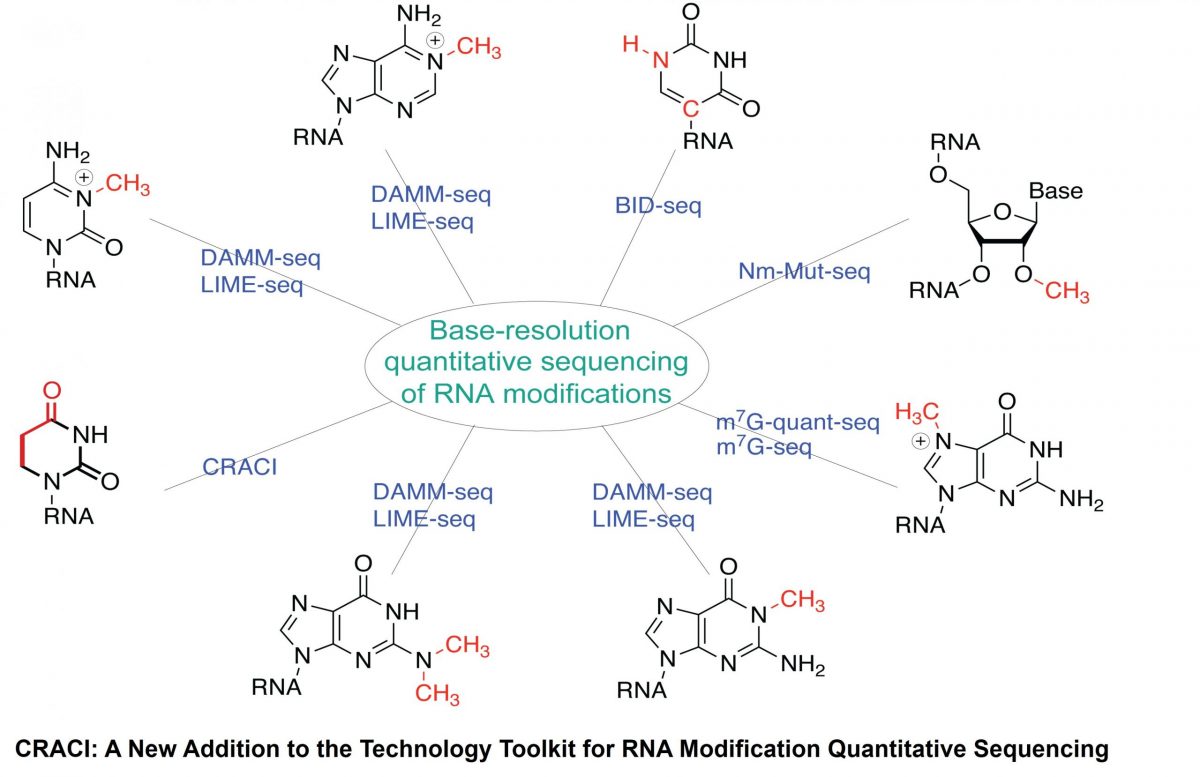
HKUST researchers have developed CRACI to pinpoint dihydrouridine, an abundant RNA modification

A team led by Prof. ZHANG Li‑Sheng (Division of Life Science & Department of Chemistry, HKUST) has developed Chemical Reduction Assisted Cytosine Incorporation sequencing (CRACI) — a sensitive method that quantitatively pinpoints dihydrouridine (D),  the most abundant tRNA modification at the single-base resolution.

Small chemical marks on RNA—like D—can work like fine‑tuning structural switches, influencing how genes are expressed. Until now, these D marks were hard to detect. With CRACI, the team created the first detailed maps of D in cellular tRNAs from mammals and plants, including those inside mitochondria.

Key discoveries:

  • Developed CRACI as the first method to enable whole-transcriptome quantitative mapping of D marks at base resolution.
  • Identified DUS2L, a protein that writes D marks in human mitochondrial tRNAs.
  • Found that D20a strongly regulate tRNA stability, which can even affect the nearby D installation.
  • Showed that D marks in human mRNA are present but very rare and occur at very low levels.

Because D is common and conserved across species, and related enzymes are potentially linked to human disease, CRACI gives researchers a powerful platform to explore how these RNA marks shape cell function, stress responses, and health. The team plans to extend CRACI to primary cells and tissues to build a clear and comprehensive picture of D roles in disease contexts.

Journal reference

Ju, CW., Li, H., Jiang, B. et al. Quantitative CRACI reveals transcriptome-wide distribution of RNA dihydrouridine at base resolution. Nat Commun 16, 8863 (2025). https://doi.org/10.1038/s41467-025-63918-w
1

Related Posts

GAS2L1 phosphorylation mediated by Nek2 induces centrosome disjunction during cell cycle

February 8, 2021
Read More

HKUST Elucidates How IGF2’s Secretory Pathway Mediates Muscle Stem Cell Differentiation Laying Foundation for Treating Multiple Diseases

December 19, 2023
Read More

HKUST Information Session for MPhil and PhD Studies (4 October 2023)

September 22, 2023
Read More

Annual Scientific Image Competition 2021

September 30, 2021
Read More

Professor ZHAI Yuanliang receives 2025/26 RGC CRF Collaborative Research Project GrantPrevious Post

ADDRESS

Division of Life Science
The Hong Kong University of Science and Technology
Clear Water Bay
Kowloon, Hong Kong

PHONE

Facsimile No. :
(852) 2358 1552

Telephone No. :
(852) 2358-7272 / 7339
  • Home
  • Careers
  • Contact us
  • Faculty
  • Intranet
HKUST
PrivacySitemap
Copyright © The Hong Kong University of Science and Technology.All rights reserved.
Follow HKUST on
FacebookInstagramLinkedinYouTube
PrivacySitemap